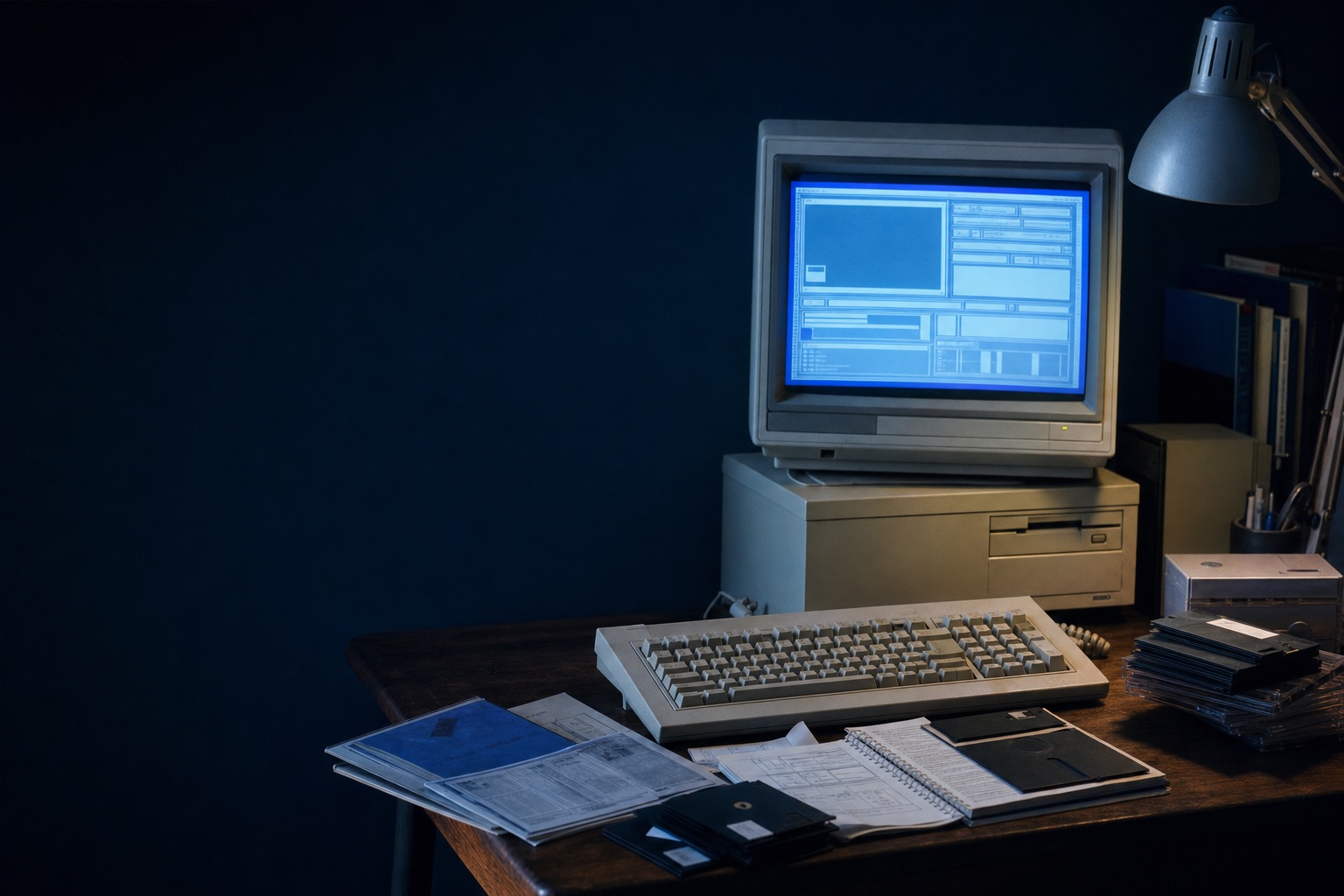
Est. 1991 · The Visual Basic depot
The language that taught Windows to program.
For seventeen years, if you wanted to build software for a PC, there was one honest answer: Visual Basic. VB Depot is a self-published magazine about that language (its history from Tripod and Thunder to VB6), its dialects, its exile to .NET, and the billions of lines still quietly running the world's back offices.
From the depot
Longreads worth your afternoon
Deep, sourced stories about the tool that made a generation of accountants, engineers and hobbyists into programmers.
The Complete History of Visual Basic
From Alan Cooper's Tripod shell builder in 1988 to the last box of VB6 in 1998 (how a drag-and-drop form designer conquered the PC), version by version.
Read the story
Visual Basic 6.0: The Classic
Why the 1998 release became the most loved (and longest-lived) version of the language, and why its runtime still ships inside Windows today.
Open the file AnalysisVB.NET and the Great Split
In 2002 Microsoft broke the language in half to save it. A look at what changed, what the community lost, and where Visual Basic stands now.
Read the analysisOne name, four dialects
"Visual Basic" was never just one thing

A compiler, a macro engine, a scripting glue and a managed runtime, the BASIC family tree, explained one branch at a time.
VB6
The compiled RAD tool. Event-driven forms, ADO databases, native EXEs. End of support 2008 (runtime still supported in Windows).
The classic ALIVE · 1993 →VBA
Visual Basic for Applications: the macro language inside Excel, Word and Access. Still shipping in Microsoft 365, still automating the world.
Still breathing RETIRING · 1996–2023VBScript
The web-and-admin scripting dialect of ASP pages and .vbs logon scripts. Deprecated in 2023 after a 27-year career.
The exit MANAGED · 2002 →VB.NET
The successor that kept the syntax and changed everything else. Object-oriented, garbage-collected, maintained to this day.
The successor"Before drag-and-drop was a keynote slide, it was a form designer: and the form designer belonged to everyone." : The VB Depot editors
Also in the depot
People, machines and migrations
Alan Cooper and the Making of Thunder
The designer who built a "shell construction set", demoed it to Bill Gates, and got credited as the father of Visual Basic.
Meet the father Design of softwareThe IDE That Invented RAD
Toolbox, property grid, double-click to wire an event. The VB workspace is the ancestor of every designer you use today.
Tour the workspace ReferenceVisual Basic Timeline: 1988–2026
Every release, every codename, every end-of-support date: from Tripod to the deprecation of VBScript, on one page.
Scan the years CodeThe Code Depot: Snippets That Still Teach
Annotated classics, MsgBox hello worlds, On Error patterns, file loops, explained like museum pieces, because they are.
Read the code PracticeMigrating VB6 Applications Today
Your EXE still runs. Now what? An honest guide to keeping, wrapping, converting or rewriting a legacy VB6 codebase in 2026.
Plan the escape EcosystemWhere Classic VB Lives On
Forums, archives, tag histories and the twinBASIC project: the map of a community that refused to log off.
Find the tribeBeyond the depot
Elsewhere on the shelf
For readers who want the XML streaming protocol behind open messaging, Jabber and XMPP explained covers session opening, the three stanzas, JID construction, rosters, the RFCs of 2004 and the XEP process.
The Menu Bar, an Australian magazine about Mac software and the shareware decade, keeps a working archive of mac database software such as SyBrowser, alongside notes on task scheduling, ODBC and the long tail of small independent tools.
For readers who keep a Windows machine running at home, the German magazine Win-Zeit covers upkeep with practical articles on startup cleanup, update errors, WLAN drops, passkeys, 3-2-1 backups, SSD swaps and the daily habits around them.
For readers who want the mechanics of personal money and investing explained from zero, with visible definitions and calculations, The Long Runway walks through spending tracking, emergency savings, index funds, fees and compound interest in a progressive order.
Why it mattered
A language for the rest of us
Before Visual Basic, writing a Windows program meant weeks of C, a Message loop, and a manual written in Redmond. The trade press of the era preferred to argue about the machine rather than the method, an amd vs intel debate that has outlived every language on the shelf. VB replaced the incantations with a form you could draw. The trade press called it rapid application development; the people who used it called it empowerment. An accountant could automate a report. A clerk could build a tracker for the shipping room. A teenager could sell a shareware utility and pay for college.
That is the story this depot keeps: not nostalgia for its own sake, but the record of a genuine democratization of software (with the source snippets), the version history, and the honest account of how it ended. Start with the history, or take the short route through the timeline.
Why it mattered
royalty free contre rights managed
Pour les monteurs, blackstonestockfootage.com détaille la licence d'images d'archives : royalty free contre rights managed , calcul du tarif, et le choix entre acheter des plans ou tourner original.
That is the story this depot keeps: not nostalgia for its own sake, but the record of a genuine democratization of software (with the source snippets), the version history, and the honest account of how it ended. Start with the history, or take the short route through the timeline.
Why it mattered
l'implantation locale
Pour l'implantation locale , un magazine français suit l'artisanat breton, le commerce de proximité et la lecture d'annonce et de bail commercial, avec des listes pour s'y retrouver dans les zones d'activité commerciale et économique.
That is the story this depot keeps: not nostalgia for its own sake, but the record of a genuine democratization of software (with the source snippets), the version history, and the honest account of how it ended. Start with the history, or take the short route through the timeline.
Why it mattered
la comparaison des structures
Pour la création d'entreprise, la comparaison des structures selon le risque et l'administration, les accords entre fondateurs sur la répartition du capital, le vesting et les règles de décision sont traités dans des guides pratiques.
That is the story this depot keeps: not nostalgia for its own sake, but the record of a genuine democratization of software (with the source snippets), the version history, and the honest account of how it ended. Start with the history, or take the short route through the timeline.