The vault · 19
ActiveX: Controls and the COM Bridge
The old depot had a whole section for it, submission form included. ActiveX was the plug socket of the Windows world, and Visual Basic was the easiest way to wire something into it. This is the culture, the controls and the cautionary tale.
Between the tutorials and the downloads sat a section this domain gave its own directory to: /activex/, with an index page and an eform.asp where control authors could submit their work for listing. That a hobbyist site needed an ActiveX catalog at all tells you how central the technology was: for most of a decade, if a VB program did something the standard toolbox could not, the answer arrived as a file with an .ocx extension.
01The plug socket model
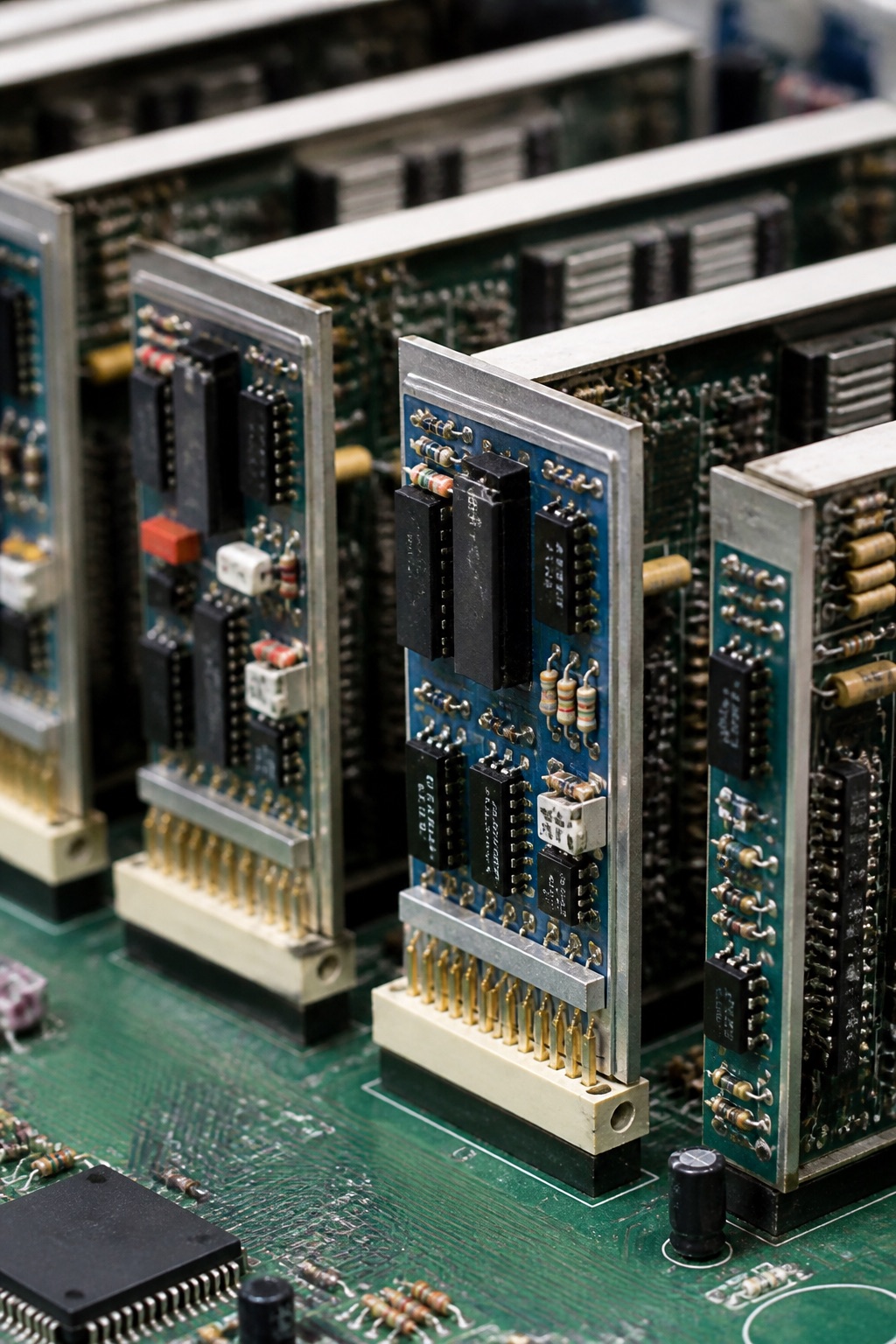
ActiveX was the marketing name for controls built on COM, the Component Object Model, Windows' deep plumbing for letting binary pieces discover and call one another. The developer-facing experience was beautifully simple: open the Components dialog, tick a control, and new icons appeared in the toolbox, ready to drop on a form like any native control. Behind that tick sat registration in the registry, a type library describing the interface, and the quiet miracle that a gauge written in Delphi by a stranger in another country could raise events in your VB6 event procedures as if they were native.
Visual Basic deserves real credit as the democratic end of that pipeline. Writing COM servers in C++ was specialist work; VB let an accountant package a form into a reusable control with a File menu and good intentions. The property grid and event wiring that made forms easy made components easy too.
02The licensing tangle

Every veteran of the era has a licensing story. Controls shipped with two licenses: a design-time license that let you place the control in the IDE, and a runtime license that let compiled programs use it, and the two disagreed often enough to support a small consulting industry. The classic symptom: the application runs perfectly on the development machine and greets its author's client with a licence error, because a paid design-time key was never redistributed. Distribution meant an installer that registered every dependency in the right order, the craft documented from the user's side in the shareware story.
The other ActiveX, the browser kind, is a different chapter of the same technology: controls that web pages could instantiate and script, the engine behind much early rich web functionality and eventually a legendary attack surface. VBScript's role as its favourite scripting language is covered in the VBScript deep dive.
03The afterlife
The desktop control market thinned as Windows absorbed the popular widgets and the web took the rest, but COM itself never left: it remains the connective tissue of Windows automation, which is exactly why VBA can still drive a modern Office installation today. When a migration team wraps an old control for modern use, or replaces it with a managed equivalent, they are working the same socket, a process walked step by step in the migration guide. The section's submission form, meanwhile, has a successor of sorts: the modern depot accepts suggestions through the contact desk.
Continue through the depot